Showing posts with label medicine. Show all posts

Diabetes foot care - continued..


Another important thing is your shoes. They can easily damage your skin and predispose you to infections.


  • Don't wear shoes without socks.
  • Don't wear sandals or other open-toed shoes.
  • Avoid high-heeled shoes and shoes with pointed toes.
  • Wear well-padded socks or stockings that are 1/2 inch longer than your longest toe. Don't wear stretch socks, nylon socks, socks with an elastic band or garter at the top, or socks with inside seams.
  • Don't wear uncomfortable or tight shoes that rub or cut into your feet. If you've had problems before because of shoes that didn't fit, you may want to be fitted for a custom-molded shoe.
  • Talk to your doctor before you buy special shoes or inserts.
  • Shop for new shoes at the end of the day when your feet are a little swollen. If shoes are comfortable when your feet are swollen, they'll probably be comfortable all day.
  • Break in new shoes slowly by wearing them for no more than an hour a day for several days.
  • Change socks and shoes every day. Have at least 2 pairs of shoes so you can switch pairs every other day.
  • Look inside your shoes every day for things like gravel or torn linings. These things could rub against your feet and cause blisters or sores.


Diabetes foot care


Diabetes is a chronic debilitating condition which predisposed you to become immune compromised. Its' macroangiopathic and microangiopathic effects render some areas of the body ischemic. This makes these areas of the body unchecked by the immune mechanisms that are there to protect you from infections. Diabetic neuropathy results in reduced sensory perception of some areas of the body, making you unaware of the damages occurring to those areas.

High levels of glucose in blood will reduce the efficiency of the immune system components, by making advanced glycation end products (due to glycation of the components of the immune system). Also in diabetes ketoacidosis neutrophillic functions are reduced. All in all immune system of a diabetes patient will have a lesser efficacy than a normal healthy person.

Lots of people with diabetes loose one of their feet or both due to negligence. This can well be prevented if you care enough.

First controlling your blood glucose levels is the main stay of tackling the problem. Proper diabetic diet, Regular exercises, avoiding smoking and alcohol, getting your medication as prescribed and getting your health status checked regularly will ensure proper glycemic control.

At the same time foot care should be given utmost importance.

  • Wash your feet every day with lukewarm (not hot) water and mild soap.
  • Dry your feet well, especially between the toes. Use a soft towel and pat gently; don't rub.
  • Keep the skin of your feet smooth by applying a cream or lanolin lotion, especially on the heels. If the skin is cracked, talk to your doctor about how to treat it.
  • Keep your feet dry by dusting them with nonmedicated powder before putting on shoes, socks or stockings.
  • Check your feet every day. You may need a mirror to look at the bottoms of your feet. Call your doctor if you have redness, swelling, pain that doesn't go away, numbness or tingling in any part of your foot.
  • Don't treat calluses, corns or bunions without talking to your doctor first.
  • Cut toenails straight across to avoid ingrown toenails. It might help to soak your toenails in warm water to soften them before you cut them. File the edges of your toenails carefully. When cutting nails, it is better to get it done by someone else, if you can not properly do it. It will ensure, your foot is not damaged while cutting nails.
  • Don't let your feet get too hot or too cold.
  • Don't go barefoot.


Anti Oxidants

Before talking about antioxidants you should know what are free radical. Free radicals are the molecules or atoms with one or more unpaired electrons. These are highly reactive as the unpaired electron / electrons try to acquire most stable electronic configuration by taking an electron from another molecule or an atom.

In recent years free radicals have become a major health issue. The potential health risks are discussed throughly through out the world.


Genetic Disorders

Genetic disorders can be either inherited or not inherited.

Inherited diseases

A disease inherited from parents (vertical transmission). But all the diseases inherited from parents are not genetic disorders.

Genetic diseases

All the genetic diseases are not unnecessarily inherited. For example the chromosomal disorders are not inherited from generation to generation. They are a result of defects in the formation of gametes. Cancers are also genetic diseases but not inherited.

Cause

- Mutation (Genetic anomalies)

-> inherited
-> spontaneous (de novo)

These mutations have to be able survive in order to be transmitted to the next generation. In other words, the person with the mutation should be able to survive and reproduce.

- Chromosomal anomalies ( Numerical anomalies)

Always not inherited.

Mutations

- Can occur die to errors in DNA replication process.

- or due to UV light, Chemicals, Radiation.

Types of Mutations

Point mutations

Substitution of one nucleotide for another. Only one codon is changed. Outcome can vary. Three possible out comes are idetified

- Silent

Phenotype is the same. But there's a small difference in the base sequence. The change in the base sequence has not been able to make a difference in the Three dimensional structure and function. This results in gene polymorphisms (Slightly different gene, but the result is the same).

- non Sense

The change in the base sequence will add a termination codon infront of the real termination codon. This will result in premature termination of the amino acid sequence synthesis.

- Mis Sense

The change in one codon results in a change in the amino acid sequence (one amino acid). So there's a defective expression that leads to a disease.

ex: sickle cell anemia

Glutamic acid is replaced by a Valine Molecule, resulting in structural defect in the beta globine chain (change in the 6th codon of the beta globine chain).

Frame Shift Mutations

Deletion or an insertion of a nucleotide changing the reading frame.

ex:

AT[G] CGG ATC GAT - reading frame before the mutation

ATC GGA TCG AT - reading frame after the mutation

Below are some example diseases.

1. Some forms of Thalassaemia
2. Duchenne muscular dystrophy
3. polymorphisms in the angiotensine converting enzyme (DI, DD)

Quantifying DNA

Yesterday We finished Extracting DNA from Both Plant and Animal tissues. So now it's time to quantify our DNA samples and see how successful we were in extracting DNA.

We can quantify our DNA sample to measure the purity of the sample and to measure the amount of DNA present in our sample.

We added 50 - 100 ul of TE buffer to the dried DNA pallet.

TE buffer contains,

1M tris - 1ml
0.5M EDTA - 200ul
Distilled water up to - 100ml

Then the solution was homogenized by pipetting in and out about 30 times.

DNA Extraction

All most all the animal tissue contain DNA. We used mammalian blood for this practical. Only white blood cells in the mammalian blood contain nuclei. As RBC contain no nuclei, we have to remove the RBC first.

We destroyed RBC by a freez shock. For this we stored our blood samples at -20C over night. This freezing process destroys the RBC cell membrane.

Then before the practicle we thawed the blood samples at room temperature. After that 700ul of blood sample was transferred to an eppendorf tube.

For more information goto : www.biotechworld.org

BiotechPracticals

DNA Extraction

DNA extraction is one of the basic steps in genetic engineering or modern biotechnology. Biotechnology in anyway is not a new science. Our anscesters have been using biotechnology for thousands of years. Biotechnolgy is any technology involving living organisms or biological products made by those organism. When humans manupulate biological processes within these organisms we call it biotechnology. So this is a very broad area. It has branches in Medicine, Agriculture, Industry and Environment.

Biotechnology over the years have evolved into more sophisticated science and is one of the most talked subjects in the world. No matter what field of biotechnolgy you are involved DNA extraction has same basic principles.

There can be many sources for DNA.

ex:

plant sources: grains, rice germs, plant leafs, any other suitable plant product.

if you want a bulky extract it will be nice to use some thing like strawberry, which gives a high yield.

animal sources: Blood cells (WBC), any other animal tussue.

WBC is taken because it is easy to obtain.

note: When you take a blood sample, there are RBC:WBC in the ratio of approximately 300:1. So first we will have to remove RBC from the sample. To do that RBC are lysed by a freez shock. Then only cells to be remained in the sample are WBCs. But if you are using avian blood samples, there's no need for freeze shock as the RBC of avian blood contain nuclei.

Once we obtained the sample form the source, following have to be done.

1. Remove the cell membranes of the cells and get the intra cellular constituents in to the solution.
2. Degrade the Proteins and cell debris to release DNA
3. Separate DNA from other bio molecules (proteins, AA, ex..)
4. Purify DNA sample

There are many ways to achieve these goals with varying degree of purity to our DNA sample. You can even complete these steps using some of the house hold chemicals. But the purity of the sample will be far less than when you do it in the lab under proper protocols.

Today the theory and the procedures behind DNA extraction, Visualisation of DNA, Electrophoresis of DNA and quantification of DNA sample is done. Tomorrow we will be doing the DNA extraction practical followed by the Electrophoresis of DNA.

How did people find out that DNA is the genetic material

Genetic material is the core factor that determine the character of an organism. So to prove that DNA is the genetic material, it should be proved that DNA is responsible for the changes in an organism.

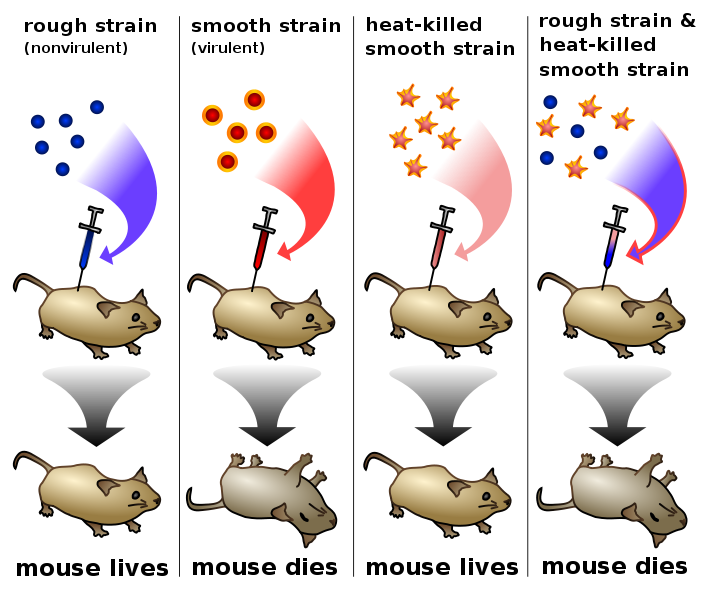
In 1928 Griffith did a simple experiment with pneumococci bacteria to prove the above. He selected a smooth strain (virulent) and a rough strain (non-virulent).

First He injected smooth strain to mice and all the mice died.

Then he injected rough strain to mice and all the mice tolerated it well.

Then he heat killed smooth strain and injected it to mice. Mice lived fine. When treated with heat, proteins get denatured and they loose their three dimensional shape and function. This step proves that the factor immediately responsible for virulency of the smooth strain is proteins.

Then he mixed heat killed smooth strain and live rough strain and cultured it in a new medium.

Then he extracted a sample from the culture and injected it to the mice. mice died. This Step shows that the core factor that was responsible for the virulency of smooth strain has some how transferred to the rough strain.
Now the character of rough strain or the virulency of rough strain has changed. Griffith termed this phenomenon as TRANSFORMATION.

When the DNA is extracted from the heat killed smooth strain and injected to mice, mice died. When extracted DNA is mixed with rough strain, the virulency of rough strain increased. This results proves that DNA is the component responsible for characteristics (in this case, virulency).

Hershay and Chase helped to establish the fact. They proved that only when phage DNA enter the host bacterial cells, new phage particles are formed.

Genetic Engineering - Intro

Biotechnology is technology based on biology, especially when used in agriculture, food science, and medicine. The United Nations Convention on Biological Diversity has come up with one of many definitions of biotechnology.


Biotechnology is often used to refer to genetic engineering technology of the 21st century, however the term encompasses a wider range and history of procedures for modifying biological organisms according to the needs of humanity, going back to the initial modifications of native plants into improved food crops through artificial selection and hybridization. Bioengineering is the science upon which all Biotechnological applications are based. With the development of new approaches and modern techniques, traditional biotechnology industries are also acquiring new horizons enabling them to improve the quality of their products and increase the productivity of their systems.

Before 1971, the term, biotechnology, was primarily used in the food processing and agriculture industries. Since the 1970s, it began to be used by the Western scientific establishment to refer to laboratory-based techniques being developed in biological research, such as recombinant DNA or tissue culture-based processes, or horizontal gene transfer in living plants, using vectors such as the Agrobacterium bacteria to transfer DNA into a host organism. In fact, the term should be used in a much broader sense to describe the whole range of methods, both ancient and modern, used to manipulate organic materials to reach the demands of food production. So the term could be defined as, "The application of indigenous and/or scientific knowledge to the management of (parts of) microorganisms, or of cells and tissues of higher organisms, so that these supply goods and services of use to the food industry and its consumers.

Using Carbon Nanotubes To Seek And Destroy Anthrax Toxin And Other Harmful Proteins


Scientists have long been interested in wrapping proteins around carbon nanotubes, and the process is used for various applications in imaging, biosensing, and cellular delivery. But this new study at Rensselaer is the first to remotely control the activity of these conjugated nanotubes.

A team of Rensselaer researchers led by Ravi S. Kane, professor of chemical and biological engineering, has worked for nearly a year to develop a means to remotely deactivate protein-wrapped carbon nanotubes by exposing them to invisible and near-infrared light. The group demonstrated this method by successfully deactivating anthrax toxin and other proteins.

"By attaching peptides to carbon nanotubes, we gave them the ability to selectively recognize a protein of interest -- in this case anthrax toxin -- from a mixture of different proteins," Kane said. "Then, by exposing the mixture to light, we could selectively deactivate this protein without disturbing the other proteins in the mixture."

By conjugating carbon nanotubes with different peptides, this process can be easily tailored to work on other harmful proteins, Kane said. Also, employing different wavelengths of light that can pass harmlessly through the human body, the remote control process will also be able to target and deactivate specific proteins or toxins in the human body. Shining light on the conjugated carbon nanotubes creates free radicals, called reactive oxygen species. It was the presence of radicals, Kane said, that deactivated the proteins.

Kane's new method for selective nanotube-assisted protein deactivation could be used in defense, homeland security, and laboratory settings to destroy harmful toxins and pathogens. The method could also offer a new method for the targeted destruction of tumor cells. By conjugating carbon nanotubes with peptides engineered to seek out specific cancer cells, and then releasing those nanotubes into a patient, doctors may be able to use this remote protein deactivation technology as a powerful tool to prevent the spread of cancer.

Kane's team also developed a thin, clear film made of carbon nanotubes that employs this technology. This self-cleaning film may be fashioned into a coating that -- at the flip of a light switch -- could help prevent the spread of harmful bacteria, toxins, and microbes.

"The ability of these coatings to generate reactive oxygen species upon exposure to light might allow these coatings to kill any bacteria that have attached to them," Kane said. "You could use these transparent coatings on countertops, doorknobs, in hospitals or airplanes -- essentially any surface, inside or outside, that might be exposed to harmful contaminants."

Kane said he and his team will continue to hone this new technology and further explore its potential applications.

Details of the project are outlined in the article "Nanotube-Assisted Protein Deactivation" in the December issue of Nature Nanotechnology.

Co-authors of the paper include Department of Chemical and Biological Engineering graduate students Amit Joshi and Shyam Sundhar Bale; postdoctoral researcher Supriya Punyani; Rensselaer Nanotechnology Center Laboratory Manager Hoichang Yang; and professor Theodorian Borca-Tasciuc of the Department of Mechanical, Aerospace, and Nuclear Engineering.

The group has filed a patent disclosure for their new selective nanotube-assisted protein deactivation technology. The research project was funded by the U.S. National Institutes of Health and the National Science Foundation.

Adapted from materials provided by Rensselaer Polytechnic Institute.

Bio Technology

I selected to do Bio Technology for my electives, So i'll have to learn something on biotech. Ok, let's start with some definitions.

According to Oxford medical dictionary it is,

"the development of techniques for the application of biological processes to the production of materials of use in medicine and industry"

NIH gives following definition,

"A set of biological techniques developed through basic research and now applied to research and product development."


So it's all about finding new solutions to old problems. that's cool isn't it.

Translation - greatest choreography of all time!!


take a look at all the vids in the playlist. it's gr8

translation

Many Natural Product Are Mutagenic

In recent years, we have heard more and more about how our diet affect our health , especially in relation to the production of cancers. Research has shown that our diet contains an enormous variety of natural mutagens and carcinogens. It is also apparent that we are ingesting vastly greater qualities of these substances than was previously suspected. Perhaps this natural chemical product should be primary concern rather than the mutagenicity of industrial chemicals, food additives and pollutants in our environment. For example, in 1989 the United States had a big publicity –generated scare concerning the plant growth regulator Alar, which is used to delay ripening of apples so that they do not drop prematurely. Alar was said to be carcinogenic, but when put in perspective with chemicals in our daily diets , it does not to be so bad. For instance, the hydrazines in a helping of mushrooms are 60 times more carcinogenic than the Alar consumed in a glass of apple juice or 20 times greater than a daily peanut butter sandwich, which frequently contains aflatoxin B. Our diets contain literally millions of natural chemicals; intact it is not practical to test them all for carcinogenicity.

Animal tests and the and the Ames test have been used to evaluate cooked foods for their potential for inducing cancers; and it has been found that browed sugars or breads contains a variety of mutagens. In addition, caffeine and its close relative theobromine found in coffee, tea, cocoa, and some soft drinks may increase the risk of tumors by inhibiting DNA repair enzymes. Plants synthesize many carcinogenic or teratogenic chemicals as delense mechanism to ward off the animals that want to consume them. Examples of plants plant carcinogens include psoralen and its derivatives, which are widespread in plants and have been used as sunscreen in France; solanine and chaconine are teratogens and are found in greened potatoes. Other food that contains natural cicargens includes banana, basil, broccoli, cabbage, cauliflower, celery, horseradish, mustard turnips, and black pepper. In addition, red wines are believed to be responsible for the high incidence of stomach cancers among the French people, although red wine also seems to decrease the incidence of coronary heart disease. It seems that nothing can be consumed that does not contain mutagen!

Another big problem with American diet is the consumption of excess quantities of fats. The average American consumes 40% of her/ his calories in the form of fat. Comparisons of cancer death rates in different national populations have provided important clues to the nutrational causes of cancer. Very different types of cancers appear in the United States than appear in Japan. In United States, colon, breast, and prostate cancer are most prevalent, whereas stomach cancers are in excess in Japan. When the amount of dietary fat intake is plotted against the number of death by breast cancer, the results are striking; the more fat in the diet, the more higher the rate of breast cancer. How might fat intake cause cancer? It may be caused by rancid fat because it represents a sizable percentage of the fat are very prone to oxidation, which produces a variety of carcinogenic compounds. Another likely explanation is that may carcinogens are soluble in fats and accumulate in the fat of the animals we eat.

Not all Enzymatic Reactions Are Catalyzed by Protein

It had been a firmly established belief in biology that catalysis is reserved for proteins. However in 1989 the Nobel Prize was presented to Sidney Altman and Tomas Cech for discovering that RNA can catalyze a reaction. In respect, catalytic RNA make s a lot of sense. This is based on the old question regarding the origin of life, which comes first, enzyme that do the work of the cell or nucleic acids that carry the information required to produce the enzymes ? Nucleic acids as catalysts circumvents this problem.

Research leading to the discovery that RNA can act as a catalyst started in the 1970’s. Thomas Cech , at the university of Colorado at Boulder, was studying the excision of introns in a ribosomal RNA gene in Tetrahymena thermophila. In attempting to purify the enzyme responsible for splicing reaction, he instead found , much of his amazement , that intron could be spliced –out in the absence of any added cell extract. Much as they tried, Cech and his colleagues could not identify any protein associated with the splicing reaction,. After much work , Cech proposed that the intron sequence portion of the RNA had properties of an enzyme enabling it to break and reform phosphodiester bonds. At about the same time, Sidney Altman, who is a Professor at Yale university was studying the way tRNA molecules are processed in the cell when he and his colleagues isolated a enzymes called RNase-P, which is responsible for conversion of a precursor tRNA into the active tRNA. Much of their surprise, they found that RNase-P contained RNA in addition to protein and that RNA was an essential component of the active enzyme. This was such a foreign idea that they had difficulty publishing their findings. The following year, Altman Demonstrated the final bit of evidence establishing that RNA can act as a catalyst by showing that the RNase-P RNA submit could catalyze the cleavage of precursor tRNA into active tRNA in the absence of the protein component.

Since Cech’s and Altman’s discovery, other investigators have discovered other example of self-cleaving RNA sot catalytic RNA molecules dubbed ribozymes have either a hairpin – or hammerhead – shaped active center and a unique secondary structure allowing them to cleave other RNA molecules at specific sequences. It is possible to produce in the laboratory ribozymes that will specifically cleave my RNA molecule. These RNA catalysts may have pharmaceuticals applications. For example , a ribozyme has been designed to cleave the RNA of HIV. By placing a ribozyme in the cell all incoming virus particles that express this particular gene will have the RNA product cleaved by the ribozyme, which ,in the end would kill all invading virus particles.

Human Behavior : Genetics & Environment

Most individuals readily accepts that physical human characteristics such as hair color, skin color and height are controlled by genes. How ever the question of the importance of the genetic and environment all factor in the control of human psychological characteristics, such as behavior and intelligence, is more controversial. This question has a long history and is often referred to as the Nature vs Nature controversy. The question I s not whether the genotype has any effect; clearly genotype and environment both influence personality and behavior . The questions are how largely a contribution each make and which is the dominant influence. In Western society, the prevailing opinion has long been that behavior is most strongly influenced by environment. This implies that personality disorder has its cause in childhood experience. And societal influences, not in the genome. This controversy is hard to test scientifically because doing quantities genetics studies of human behavior is difficult. Large scale experiment involving controlled human mating cannot be made, nor is it possible to control the environment of human population. It is possible, however to study cases in which humans with identical genotypes are exposed to different environment by studying cases of monozygotic twins who have the same genotype in principle, all difference in behavior characteristics is for environmental influences, whereas similarities may result from genetic influences.

T.J Bouchard at the University of Minnesota performed an important twin study . Science 1979, Bouchrd has studied over 1000 pairs of monozygotic twins raised together(MZT) or raised apart (MZA). Twins participating in the study undergo over 50 hours of intelligence and psychological testing, the result suggest that genetics has large influences on intelligence and behavior. Calculation of H2 for IQ, for example suggest that more than 70% of the variance in IQ can be traced to genetics. Comparing MZA with MZT suggest that being reared together actually has only a minor effect on IQ . The together ness factor was more pronounced in childhood and early adolescence but declined greatly during adulthood.

Some of the most interesting result came from test measuring personality and behavior characteristics. For Characteristics such as aptitude , leisure time activities and vocational interest the twins showed a strong genetic influence, as largely as for IQ. No aspect of behavior was unaffected . Overall ,the genetics influence on all behavioral characteristics was been 50 and 70%. Major personality disorder (manic depression) also have significant genetic basis.

Individual study cases cannot be the basis for a strong conclusion. But taken together , the many cases suggest that genotypic differences may account for many, or even a majority of, the difference in behavior between individuals in human populations, including behaviors normally assumes to be under conscious control. It is becoming clear that the brain ,like other organs of the body , is strongly influenced by the genotype, and these influences may shape our behavior to a much greater extent than was previously believed.

Virtual Colonoscopy

Virtual Colonoscopy
Virtual Colonoscopy is a new method that permits doctors to look at the bowel (colon) to detect polyps and cancers. Polyps are small abnormal growths in the colon that can become cancerous if they are not removed. Virtual Colonoscopy is a recently developed method that uses a CT scanner and computer virtual reality software to examine inside the body without having to insert a long tube (Conventional Colonoscopy) into the colon or without having to fill the colon with liquid barium (Barium Enema).
  • Procedure

While preparations for virtual colonoscopy, the patient will usually be asked to take laxatives or other oral agents at home the day before the procedure to clear the colon.
VC is done in the radiology department of medical center. The examination takes place within 10 minutes and does not require sedatives. During the procedure,
  • The patient is placed in a supine position on the table
  • A thin tube is inserted into the rectum, so that air can be pumped through the tube in order to inflate the colon for better vision.
  • The table moves into the scanner to produce a series of two-dimensional cross-sections along the length of the colon. A computer puts these images together to create a three-dimensional picture that can be viewed on the screen.
  • The patient is told to hold his/her breath during the scan to avoid distortion on the images.
  • The scan is then repeated with the patient in a prone position.
After the examination, the images produced by the scanner must be converted into a 3D image. A radiologist sorts the results to identify any disorder.
The patient may get back to normal activity after the procedure, but if abnormalities are found and the patient needs conventional colonoscopy.
  • Advantages

VC is comfortable than conventional colonoscopy for some patients because there is no use of a colonoscope. Consequently, no sedation is needed, and the patient can return to his/her usual activities or go home after the procedure without any aid. VC provides more detailed images than an x-ray using a barium enema, sometimes called a lower gastrointestinal (GI) series. Also it takes less time than either a conventional colonoscopy.
  • Disadvantages

The main disadvantage to VC is cost. Another disadvantage is that a radiologist cannot take tissue samples or remove polyps during this process, so a conventional colonoscopy must be performed if lesions are found. In addition, VC does not show as much detail as a conventional colonoscopy, so cancerous cells smaller than 2 millimeters in diameter may not show up on the images. Virtual Colonoscopy done with CT exposes the patient to ionizing radiation; however some research has demonstrated that low dose VC can also be as effective in demonstrating colon and bowel disease due to the great difference in x-ray absorption between air and the tissue making the inner wall of the colon.
  • People who should be screened for colorectal cancer

    Currently, it's suggested that people of 50 years and older should be screened for colorectal cancer. If there's a tendency towards colon cancer in the family, it's advised to start 10 years earlier than 50 and to use a more sensitive and specific technique. But for the general population, this limit is 50 years and older.
  • People over the age of 50 who get screened by this processes

    The unfortunate thing is colorectal cancer should largely be a preventable illness, but in the United States at this time only 30 to 40 percent of people who ought to be screened have actually been screened. That gives us a lot of foundations to make up.
  • Available screening methods for detection of colon cancer

    While there is always new for technological improvements, we need to improve the current screening technologies. Despite their drawbacks, they have been proven effective in reducing the burden of disease. There are five regimens that are currently suggested, providing practitioners and patients with a menu of options. They include annual fecal occult blood testing (FOBT) - that is, looking for blood in the stool; sigmoidoscopy every five years; colonoscopy every 10 years; air-contrast barium enema every five years; and a combination of FOBT with flexible sigmoidoscopy, each at their usual intervals.
Each of these tests have various advantages and disadvantages; for instance, they differ in sensitivity and specificity -- that is, how well they detect colon cancer or polyps when they're present and reassure us when they're absent. Colon cancer is the end-result of a prolonged process during which changes in genes in the cells lining the intestine accumulate, resulting in abnormal growth of cells. If polyps gather additional genetic changes, a part of them may become cancerous. We are worry about polyps becoming cancerous as they grow; for instance, polyps greater than one centimeter in diameter are usually removed because they present a high cancer risk.
  • Reasons that prevent people to be screened

    There are many reasons why people aren't screened. Many people don’t recognize whether they should be screened or not. Do they know the current screening guidelines? If not, has colorectal cancer screening been recommended to them by their health care centers? Unfortunately, some recent surveys suggest that colorectal cancer screening is not usually recommended by health care centers, despite evidence of its benefit. Luckily, colon cancer screening and colonoscopy is now paid by Medicare, so cost is not as big a deal as it has been in the past.
  • Optical colonoscopy considered the "gold standard" for colorectal cancer screening

    Colonoscopy is taken as the gold standard for colorectal cancer screening by some groups but not by others. Some radiologists recommend colonoscopy as a preferred approach to colorectal screening. However, optical colonoscopy is considered the gold standard by some professionals because it permits complete visualization of the entire colon, hence providing the opportunity to identify precancerous polyps and cancer, and then to do diagnostic biopsies or therapeutic removal of these lesions, as soon as possible.

Cancer?

Cancer is a Latin word meaning crab or creeping ulcer.

The human body consists of about 3 trillion cells, the body’s tiny building blocks seen only under a microscope. In the middle of each cell is a structure, the nucleus, which is full of deoxyribonucleic acid (DNA), and contains about 100,000 genes which control every activity of the cell. Damage to DNA, for example by tobacco or other harmful substances, can lead to a normal cell becoming cancerous. The cells are bound together by connective tissue to form a variety of organs, such as the skin, heart, lung or liver, together making up the body. Each tissue and organ has cells which have their individual shapes, structures and functions to fulfill. Every cell has a regular lifespan in every organ; it then dies and is replaced by the division of young cells. The body controls the death of old cells and the birth of new cells.

Causes of cancer

There are numerous causes of cancer a few are listed below

• Growing older
• Tobacco
• Sunlight
• Ionizing radiation
• Certain chemicals & other substances
• Some viruses & bacteria
• Certain hormones
• Family history of cancer
• Alcohol
• Poor diet, lack of physical activity or being overweight


• Growing older

The most important risk factor for cancer is growing older. Most cancers occur in people over age of 65. but people of all ages, including children, can get cancer, too.

• Tobacco

Tobacco use is the most preventable cause of death. Each year, more than 180,000 Americans die from cancer that is related to tobacco use.

Using tobacco products or regularly being around tobacco smoke (environmental or secondhand smoke) increases the risk of cancer.

Smokers are more likely than nonsmokers to develop cancer of lung, larynx (voice box), mouth, esophagus, bladder, kidney, throat, stomach, pancreas, or cervix. They also are more likely to develop acute myeloid leukemia (cancer that starts in blood cells).

People who use smokeless tobacco (sniff or chewing tobacco) are at increased risk of cancer of mouth.

• Sunlight

Ultraviolet (UV) radiation comes from the sun, sunlamps, and tanning booths. It causes early aging of the skin and skin damage that can lead to skin cancer.

• Ionizing radiation

Ionizing radiation can cause cell damage that leads to cancer. This kind of radiation comes from rays that enter the earth’s atmosphere from outer space, radioactive fallout, radon gas, x-rays, and other sources.

Radioactive fallout can come from accidents at nuclear power plants or from the production, testing, or use of atomic weapons. People exposed to fallout may have an increased risk of cancer, especially leukemia and cancers of the thyroid, breast, lung, and stomach

Radon is a radioactive gas that you cannot see, smell, or taste. It forms in soil and rocks. People who work in mines may be exposed to radon. In some parts of the country, radon is found in houses. People exposed to radon are at increased risk of lung cancer.

• Certain chemicals & other substances

People who have certain jobs (such as painters, construction workers, in chemical industry) have an increased risk of cancer. Many studies have shown that exposure to asbestos, benzene, benzidine, cadmium, nickel, or vinyl chloride in the work place can cause cancer.

• Some viruses and bacteria

Being infected with certain viruses or bacteria may cause the risk of developing cancer.
HUMAN PAPILLOMAVIRUSE (HPVs)
HEPATITIS B & HEPATITIS C VIRUSES
HUMAN T-CELL LEUKEMIA/LYMPHOMA VIRUS (HTLV-1)
EPSTEIN-BARR VIRUS
HELICOBACTER PYLORI
HIV
HHV8

• Certain hormones

Doctors may recommend hormones (estrogen alone or estrogen along with progestin) to help control problems (such as hot flashes, vaginal dryness, and thinning bones) that may occur during menopause. However studies show that menopausal hormone therapy can cause serious side effects. Hormones may increase the risk of breast cancer, heart attack, stroke, or blood clots

• Family history of cancer

Most cancers develop because of changes (mutations) in genes. A normal cell may become a cancer cell after series of gene changes occur. Tobacco use, certain viruses, or other factors in a person’s lifestyle of environment can cause such changes in certain types of cells.

Some gene changes that increase the risk of cancer are passed from parent to child. These changes are present at birth in all cells of the body.

It is uncommon for cancer to run in a family. However, certain types of cancer do occur more often in some families than in the rest of the population. For example melanoma and cancers of the breast. Most of the time, multiple cases of cancer in a family are just a matter of chance.

• Alcohol

Having more than two drinks each day for many years may increase the chance of developing cancers of the mouth, throat, esophagus, larynx, liver, and breast. The risk increases with the amount of alcohol that a person drinks. For most of these cancers, the risk is higher for a drinker who uses tobacco.

• Poor diet, lack of physical activity, or being overweight

People who have poor diet, do not have enough physical activity, or are overweight may be at increased risk of several types of cancer. For example, studies suggest that people whose diet is high in fat have an increased risk of cancers of colon, uterus, and prostate. Lack of physical activity and being overweight are risk factors for cancers of the breast, colon, esophagus, kidney, and uterus


Cancer prevention

Prevention is defined as the reduction of cancer mortality via reduction in the incidence of cancer. This can be accomplished by avoiding a carcinogen or altering its metabolism; pursuing lifestyle or dietary practices that modify cancer causing factors or genetic predispositions; and/or medical intervention (chemoprevention) to successfully reverse preneoplastic changes.
What you eat and drink, how you live, where you work….all these factors can affect your risk for cancer. Some factors related to cancer prevention are

• Tobacco and cancer
• Sun safety
• Food and fitness
• Environmental carcinogens
• School health
• Prevention & Detection Programs

• Smoking is preventable cause of cancer in our society. We can make people aware of its disadvantages by public services or individual efforts.

• The sun’s UV rays cause the vast majority of skin cancer including melanoma, which can be life threatening. The sun burn will fade, but damage to deeper layers of skin remains and can eventually cause cancer. That’s why sun-safe habits should begin in childhood and a lifetime.

• Your diet can affect your risk for cancer. Eating right, being active, and maintaining a healthy weight are important ways to reduce your risk of cancer-as well as heart disease and diabetes. You should cook smart, take control of your weight, and should have fruits and vegetables in your diet.

• Environmental factors can include smoking, diet, sun exposure, and infectious diseases, as well as chemicals and radiation in our homes and work places. Environmental carcinogens include air pollutants, medical treatments, radiations, chemicals, and consumer products.

• School health isn’t just about what’s taught in the classroom. It’s about creating policies and programs that promote a healthy school environment, thereby reinforcing healthful living. It’s about reinforcing healthy habits every day and every year that kids are in school.

• Prevention and detection programs like ACS (American Cancer Society) help educate you about cancer risks, early detection methods, and prevention.

Cancer therapies


Animal studies have already contributed to the development of a drug that has been described by some as “the vanguard in a new generation of cancer drugs.” Gleevec, a chemotherapy that works by inhibiting a protein that contributes to cancer cell growth, is the first effective treatment for people with chronic myeloid leukemia, Gleevec was developed using cell cultures and mouse studies. Like the research programs devoted to developing a malaria vaccine and treatments for epilepsy and heart disease, cancer research requires the use of many different models. Cell and tissue culture, whole animal models, and clinical (human) studies help scientists better understand both the cause of various diseases and better ways to prevent, treat and possibly cure them. All of these methods were used
in the development of Gleevec. In order to develop a new drug to treat a disease, it is necessary to make use of all of these models. Culture, animal, and human studies each play an important role in the struggle to understand disease and develop cures.

GLEEVEC - A drug that is highly effective in treating chronic myeloid leukemia. Although it took more than a decade of laboratory work to develop Gleevec, the drug gained FDA approval in less than 3 years. Typically, it takes 14 years to win FDA approval by proving that a new drug is safe and effective through clinical trials.

CHEMOTHERAPY-Treatment of a disease with a chemical that has a toxic effect on cancerous tissue (anticancer therapy) or on a disease-producing germ (antibiotic)

A Reader's Toolbox

Women should take a lot of care of the sensitive parts of their body like eyes, perfect breasts and teeth etc. As the health of the child depends on the health of the mother so extra care must be taken to improve it. Women should always take healthy foods to ensure perfect nutrition. Women should go for routine checkup of their complete body so that they can find out any internal changes like breast cancer symptoms or any other malfunctioning of the body as well.

Microscopic Urine Analysis!


In this test, urine is centrifuged at relatively low speed (about 2-3,000 rpm) for 5-10 minutes so the solid materials sediment at the bottom. The sediment is spread on a slide and looked at under a microscope.

Red or white blood cells.

Blood cells are not found in urine normally. Inflammation, disease, or injury to the kidneys, ureters, bladder, or urethra can cause blood in urine. Strenuous exercise, such as running a marathon, can also cause blood in the urine. White blood cells may be a sign of infection or kidney disease.

Casts.

Some types of kidney disease can cause plugs of material (called casts) to form in kidneys (in the distal convoluted tubule (DCT) or the collecting duct ). The casts then get flushed out in the urine. Casts can be made of red or white blood cells, waxy or fatty substances (mucus), or protein. The type of cast in the urine can help show what type of kidney disease may be present.

Hyaline Cast

Red Cell Casts


Crystals.

Healthy people often have only a few crystals in their urine. A large number of crystals, or certain types of crystals, may mean kidney stones are present or there is a problem with body metabolism.

Oxalate Crystals

Bacteria, yeast cells, or parasites.

There are no bacteria, yeast cells, or parasites in urine normally.